

Bengaluru, Jan 29: This summer, the state will experience high temperatures, with temperatures in all districts of the state expected to be 1 to 3 degrees Celsius higher than average, weather experts have predicted.
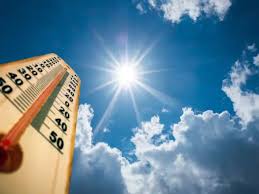
As the effect of ‘La Nina’ (cooling of the surface temperature in the tropical Pacific Ocean) is weakening this year, the effect of rain and cool weather will decrease and the effect of the sun will increase. This will also increase the temperature. However, the extent of the summer heat will become clear in the last week of February or the first week of March, said weather expert Srinivas Reddy.
If we look at the current weather in various districts of the state, it is already clear that the experience of summer heat is starting. The cold is decreasing. Even if the summer temperature increases by one or two degrees Celsius, some districts of North Karnataka will be more affected. Because the temperature in those districts will be above 40 degrees Celsius, said Srinivas Reddy.
According to the report of the Central Meteorological Department, Bangalore Division, on January 28, dry weather has been observed across the state. In many coastal districts, the temperature was 1.6 degrees Celsius to 3 degrees Celsius above the average. In one or two places in the northern interior, the temperature was 3.1 degrees Celsius to 5 degrees Celsius above the average.
Maximum temperature:
The maximum temperature in Bellary was 33.8 degrees Celsius, Kalaburagi 33, Mangalore 32.9, Karwar 32.6, Bengaluru city 29.6, Chitradurga 31.5, Gokarna 32.6 degrees Celsius.
Water problem likely in some places
Due to more than usual rainfall this time, the water level in most of the reservoirs of the state, except for the Tungabhadra reservoir, is good. Therefore, such a problem will not arise in areas dependent on the water from the reservoir. However, areas facing water scarcity and areas dependent on borewell water will have to face the effects of rising temperatures. Experts say that water availability in such areas may decrease and face difficulties.