

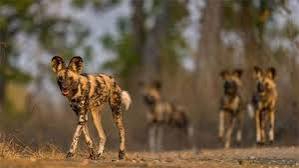
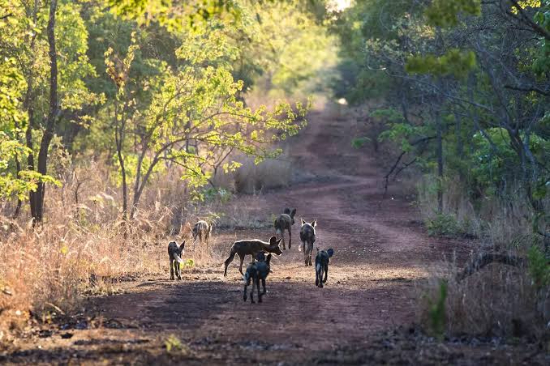
Africa, Sept 17: A pack of African wild dogs in Zambia has completed a journey spanning a staggering 2,485 miles—approximately 4,000 kilometers. Scientists state that this is the first such incident recorded in Africa. Moreover, they describe it as the longest journey ever documented of animals traveling overland in search of a mate.
The Mysterious Journey of African Wild Dogs:
This serves as a fresh example of how wildlife navigates life amidst increasing human activity in the wild. Three African wild dogs undertook this journey, completing it over a period of eight months. While the straight-line distance between their starting point and their destination is 418 kilometers, the dogs did not travel directly; instead, they traversed various areas along the way, increasing the total distance traveled by 10 percent. Navigating from Zambia’s capital, Lusaka, through areas developed into urban settlements, the dogs cleverly managed to avoid human contact throughout their journey.
Such a journey is termed ‘dispersal.’ This is because, unlike migration driven by the need for food or specific climatic conditions, these wild dogs moved from one region to another specifically in search of a mate. African wild dogs typically live in packs and roam in search of new territories. However, they do not seek mates within their own pack; instead, they travel to find mates from other packs. This study also highlights the challenges these wild dogs face.
The Wild Dogs’ Journey for Mates:
Research utilizing GPS tracking revealed that some wild dogs died after getting caught in snares illegally set by poachers. Researchers noted that while three wild dogs undertook such journeys, one perished mid-trip after being trapped, whereas the others were observed repeatedly returning to that specific area.
African wild dogs are among the rarest wildlife species in the world, with approximately 6,000 remaining in African forests. Scott Creel, a professor at Montana State University and the lead author of this research paper, has been studying African wild dogs since 1991; he stated that this recent study offers new hope.