

Ghaziabad: The Supreme Court has granted euthanasia to 32-year-old Harish Rana, who was in a coma after suffering severe brain injuries after falling from a building 13 years ago.
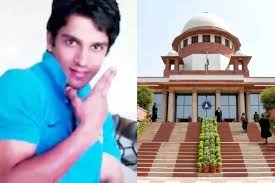
The verdict was given by an emotional bench of Justices J.B. Pardiwala and K.V. Vishwanathan, which clarified several aspects of the 2018 Supreme Court verdict. The bench, which held that the key question in such cases is not whether death is in the best interest of the patient, but whether continuing life-saving treatment serves the best interest of the patient, allowed Rana’s parents to withdraw medical support.
The court clarified that medically administered nutrition qualifies as a form of medical treatment. It said such medical support can be withdrawn only if the medical boards examining the patient conclude that the prospect of recovery is not meaningful and recommend it.
The bench, which read out the verdict, noted that Rana was once a “bright young man” but brain injuries sustained in a fall from a high-rise building had left him paralyzed. Medical reports submitted before the court indicated that his condition had not improved in the last 13 years and he was completely dependent on others for survival.
Passive euthanasia, which involves withdrawing life-sustaining measures, was first recognised by the Supreme Court in the 2011 Aruna Shanbaug case. It was later legalised in 2018 under the Common Cause vs Union of India judgment, which recognised the right to die with dignity as part of the right to life. Active euthanasia, which involves directly causing death through drugs or injections, remains illegal in India.
Rana, who was pursuing a degree in civil engineering at Chandigarh University, fell from the fourth-floor balcony of his PG hostel on August 20, 2013, sustaining severe head injuries and becoming completely disabled. Since then, he has been dependent on a tracheostomy tube for breathing and a gastrostomy tube for nutrition.
Harish’s parents, who also look after two other children, sold their house in Delhi and moved to Ghaziabad to be at his bedside at AIIMS. Over the years, they had sought legal permission for passive euthanasia to end their son’s chronic suffering.