

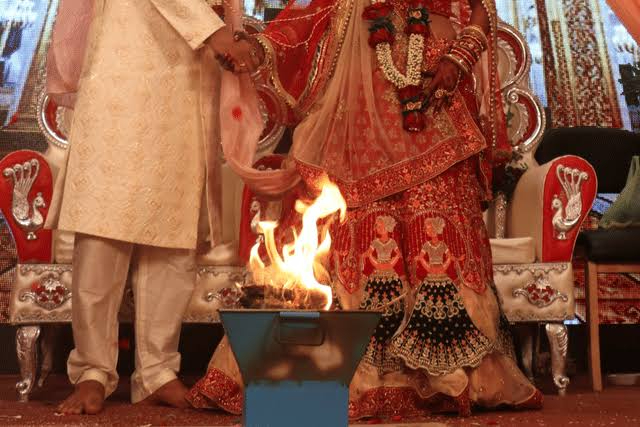
Ahmedabad: A Hindu marriage is not valid just because the marriage is registered. The Gujarat High Court has given a landmark verdict that a marriage is valid only when the necessary rituals of Hindu tradition, including Saptapadi, are performed. In its verdict delivered on June 23, a division bench of Justices Ilesh Vora and R.T. Vachani held that Hindu marriage is not just a formal event, it is a religious ceremony and a sacred bond.
What is the case?
Kaushal Sonar, who is based in Britain, had approached the court to declare his marriage with a woman from Ahmedabad invalid. He came to know about this only when the woman showed her parents the marriage certificate and said that she was his legal wife. Also, the marriage documents were signed without his consent. He had argued that no Hindu traditional rituals were performed and they had never lived together as husband and wife.
High Court Opinion
Although the woman herself admitted before the family court that no marriage rituals had taken place and the two had not lived as husband and wife, the High Court said that the order of the family court rejecting the application was wrong. The court referred to Section 7 of the Hindu Marriage Act, 1955, which states that a Hindu marriage must be solemnized according to customary rites and rituals. In particular, the Saptapadi is an important and integral part of a Hindu marriage. The court clarified that only when this ritual is performed, the marriage acquires religious, social and legal validity.
‘Marriage is not limited to song and dance’
The High Court said that a Hindu marriage is not just a song, dance, banquet or commercial transaction. It is a sacred institution where two people build a family with equality, mutual consent, respect and a healthy relationship for life. In Hindu tradition, the wife is considered as ‘Ardhangi’. The court also held that marriage is the foundation of a new family and has the status of a religious sacrament.