

New Delhi: Climate change has become a major global concern. Rising global temperatures are causing ice to melt, leading to a rise in sea levels. Consequently, several island nations—including the Maldives and Tuvalu—are facing an existential threat.
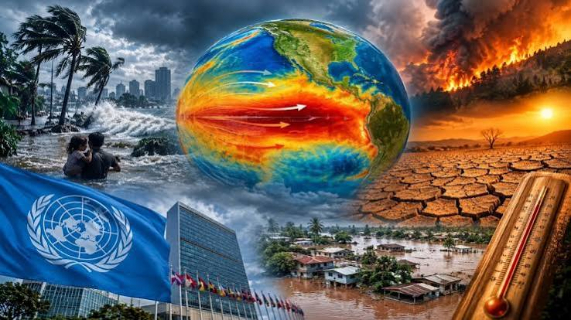
In India, too, coastal regions—such as Mumbai, Chennai, and parts of Kerala—are facing growing concerns.
El Niño is a natural climatic phenomenon where the surface waters of the Pacific Ocean become warmer than usual. Climate change refers to long-term global warming. While El Niño can increase the risk of droughts in some regions and heavy rainfall or heatwaves in others, the primary driver of rising sea levels is global warming.
What causes sea levels to rise?
There are two main reasons for the rise in sea levels:
– Melting of glaciers: Ice in polar regions, such as Antarctica and Greenland, is melting and flowing into the oceans.
– Thermal expansion of seawater: As global temperatures rise, seawater also warms up. Warmer water expands and occupies more space.
– Coastal erosion: Land along the coastline is gradually being washed away by the action of waves and storms. – Land Subsidence: In some coastal areas, the excessive extraction of groundwater and the natural sinking of the land increase the risk of seawater intrusion.
The impact of rising sea levels is not the same for every country. Low-lying islands and coastal cities are at the greatest risk.
Maldives:
Most of the islands in this nation, located in the Indian Ocean, lie at a very low elevation above sea level. A rise in sea levels could pose a threat to homes, airports, the tourism industry, and sources of drinking water.
Tuvalu:
A small island nation in the Pacific Ocean. Rising sea levels could reduce the available land for habitation. Furthermore, saltwater could seep into the ground, compromising the supply of drinking water. Kiribati
Rising sea levels, coastal erosion, and saltwater intrusion are major challenges for this country.
Marshall Islands:
Composed of low-lying coral islands, this nation faces risks from ocean waves, flooding, and land erosion.
Fiji and Samoa:
Coastal areas may face an increased risk of flooding, storm surges, and land erosion. It may even become necessary to relocate some villages to safer locations. Potential Impacts on Various Countries
– India: Possibility of a weak monsoon, leading to drought and agricultural losses.
– Indonesia: Reduced rainfall, forest fires, and water shortages.
– Australia: Hot weather, drought, and the risk of forest fires.
– South Africa and Zimbabwe: Drought, crop losses, and food shortages.
– Peru and Ecuador: Heavy rainfall, flooding, and landslides.
– Parts of Central America: Drought and a decline in agricultural production.
– Southern United States: Risk of winter rainfall and flooding in certain areas.
The impact of El Niño is not identical every time; local weather conditions also play a role. Therefore, this list should not be considered a definitive forecast.
What challenges does India face?
India has a coastline spanning approximately 7,500 km. Millions of people depend on fishing, tourism, and coastal trade. Rising sea levels and climate change could pose significant challenges for many parts of the country.
Mumbai, Maharashtra:
If high tides coincide with heavy rainfall, low-lying areas could experience flooding. This could potentially cause damage to roads, railways, and buildings. Five Major Challenges Facing India
Impact on Agriculture: If the monsoon rains decrease due to El Niño, crops may face a shortage of water.
Drinking Water Issues: Increased drought conditions place greater strain on reservoirs and groundwater levels.
Difficulties for Fisherfolk: Changes in sea temperature and climate patterns can affect the movement of fish and, consequently, fishing activities.
Risks to Coastal Areas: Seawater intrusion can cause damage to homes, roads, and agricultural land.