

Mangaluru: St Aloysius Pre-University College (SAPUC), Mangaluru, organised educational tours across South India and Europe, offering students valuable opportunities to learn beyond the classroom. The tours provided first-hand exposure to historical landmarks, architectural heritage, religious traditions and diverse cultures. Covering destinations across South India, Kochi and four European countries – France, Belgium, the Netherlands and Germany – the excursions helped students gain a broader understanding of history, culture and the world around them.
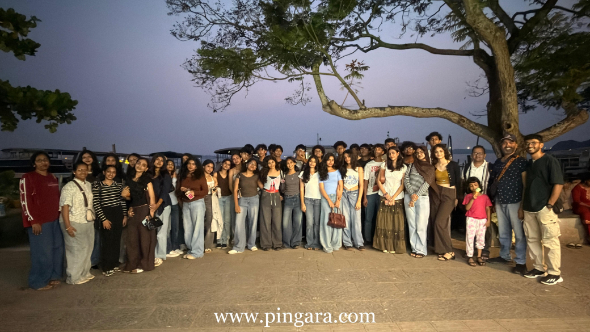
Organised by various departments, the tours introduced students to regional history, architectural heritage, religious traditions, indigenous crafts and international academic environments. While the domestic tours focused on the historical and cultural richness of South India, the international tour offered insights into European history, education, architecture and contemporary lifestyles.
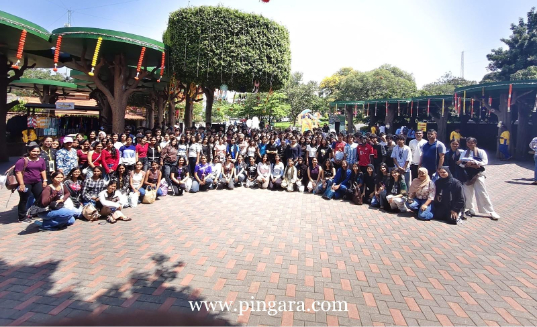
The Hindi Department organised an educational tour covering Shravanabelagola, Hassan, Belur, Halebeedu, Bengaluru and Wonderla. Visits to Shravanabelagola, Belur and Halebeedu familiarised students with Karnataka’s rich architectural heritage, sculptural excellence and religious history. The visit to Wonderla and Lulu Mall added a recreational dimension to the tour.
The Department of Languages organised a heritage tour to Badami, Aihole, Pattadakal and Lakkundi. Students explored the architectural splendour of the Chalukyan period through visits to the Durga Temple, Banashankari Temple, Brahma Jinalaya and Veeranarayana Temple. The intricate stone carvings, distinctive temple layouts and sculptural features offered insights into the region’s artistic and religious traditions. An interaction with a Sanskrit scholar and a visit to a traditional weaving unit further enriched their understanding of classical linguistic heritage and indigenous craftsmanship.
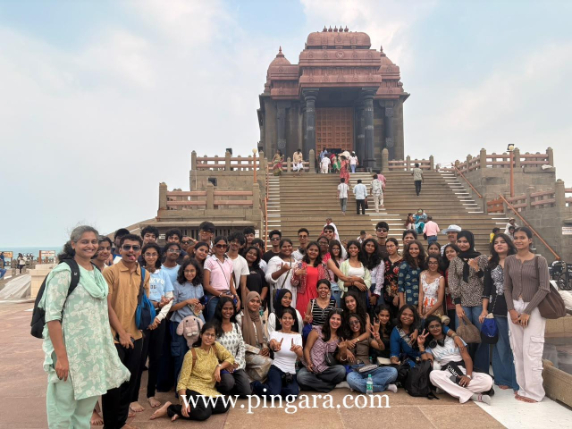
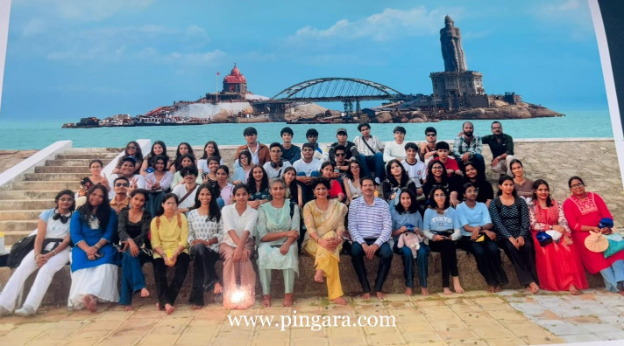
The Department of History organised an educational tour to Kanyakumari, Thiruvananthapuram and Padmanabhapuram, introducing students to the region’s historical, religious and architectural heritage. The itinerary included the Vivekananda Rock Memorial, Thiruvalluvar Statue and Triveni Sangam, where students witnessed the spectacular sunrise and sunset. Visits to Kumari Amman Temple, Our Lady of Ransom Church, Sree Padmanabhaswamy Temple and St Joseph’s Metropolitan Cathedral offered glimpses into the architectural features and religious traditions of different communities. At Padmanabhapuram Palace, students explored the distinctive wooden architecture and craftsmanship associated with the erstwhile Travancore dynasty. The visit to Thiruvananthapuram Zoo provided an opportunity to learn about wildlife and biodiversity, while the views from Alappuzha Lighthouse added to the experience.
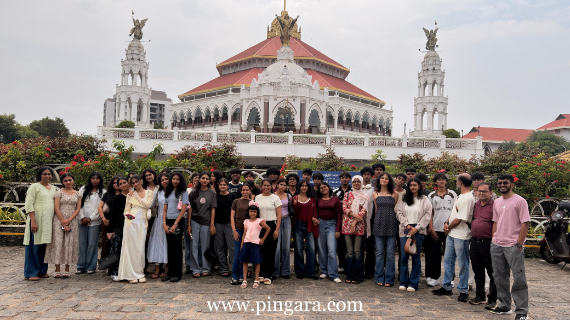
Another educational tour took students to Kochi. The itinerary included Kochi Marine Drive, a coastal boat ride, Lulu Mall and Wonderla Kochi. A visit to Hill Palace, the former residence of the Maharajas of Cochin, had to be cancelled due to heavy rainfall. The group instead visited St George’s Syro-Malabar Forane Church at Edappally.
A particularly enriching experience was the visit to Jew Town in Mattancherry and the historic Paradesi Synagogue, established in 1568. The synagogue’s Belgian glass chandeliers and hand-painted Chinese porcelain tiles offered students a glimpse into the architectural influences and historical legacy of Kochi’s Jewish community.
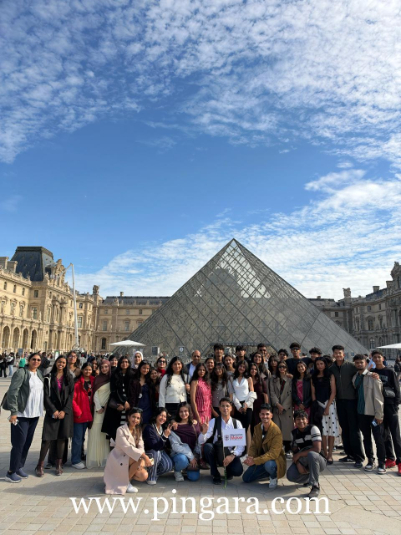
The international educational tour took students across France, Belgium, the Netherlands and Germany. In Paris, they visited the iconic Eiffel Tower, Louvre Museum and Notre-Dame Cathedral, while also experiencing French cuisine and aspects of everyday local life. The Belgian itinerary featured Brussels’ Grand Place, the Belgian Chocolate Museum, Manneken Pis, Atomium and Mini-Europe, along with a visit to Antwerp.
A significant highlight was the academic visit to a university in Brussels, where students interacted with university students and faculty members. The interaction provided valuable insights into European higher education, academic practices and international learning opportunities. In the Netherlands, the group explored Amsterdam’s canals, Dam Square, the Royal Palace and Flower Market. A canal cruise, along with visits to Madurodam and Scheveningen Beach, offered further exposure to Dutch architecture and cultural life.
The German leg of the tour included visits to Frankfurt’s Römerberg Square and Frankfurt Cathedral, followed by a cruise along the Main River. Students also explored the scenic Rhine Valley, Rüdesheim, the Niederwald Monument and Drosselgasse. Experiencing local culinary traditions, including German bread and pretzels, added another dimension to their understanding of European culture and everyday life.
Together, these five educational tours provided students with valuable learning experiences beyond the classroom. Encounters with historical monuments, architectural traditions, religious diversity, indigenous craftsmanship and international academic environments helped broaden their knowledge and cultural awareness. Through such initiatives, SAPUC continues to encourage experiential learning and enable students to develop a deeper appreciation of their heritage and the wider world