

New Delhi, November 25: The Tamil Nadu government has approached the Supreme Court, challenging an order by the Madras High Court to remove a statue of E.V. Ramasamy (Periyar)—a leader of the Dravidian movement—which is installed on the premises of the Arulmigu Brahmasirakandeeswarar Temple in Kandiyur, Thanjavur district. Through the Thanjavur District Collector, the Tamil Nadu government has filed a Special Leave Petition (SLP) in the Supreme Court, seeking a stay on the order issued by the Madurai Bench of the Madras High Court on October 30, and requesting that the order be set aside.
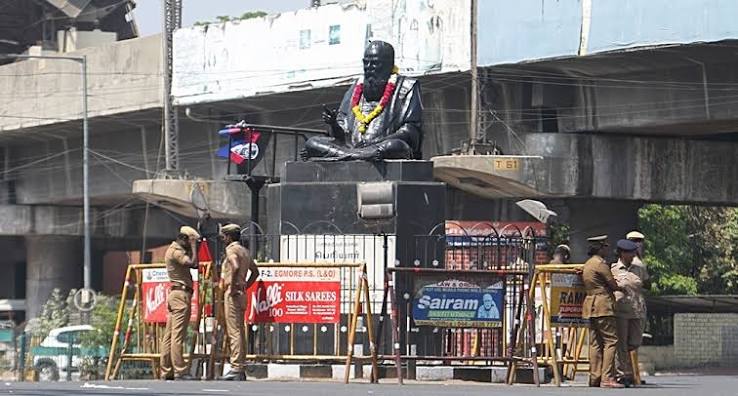
What was the High Court’s order?:
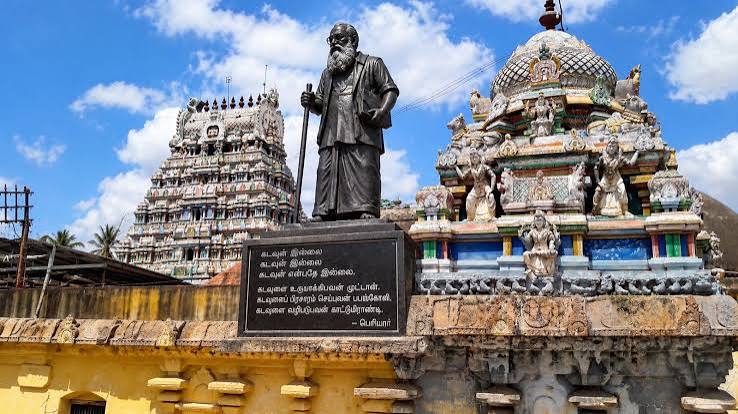
While hearing a writ petition filed by one Rama Ravikumar, the Madras High Court observed that the statue of Periyar had been installed on temple property without the permission of the Hindu Religious and Charitable Endowments Department or other competent authorities. Furthermore, the Court directed the Thanjavur District Collector to ensure the statue is safely removed and relocated to another suitable site within four weeks. Background of the Dispute:
Around 1990, the Dravidar Kazhagam organization installed this statue within the premises of the Kandiyur temple, near Thiruvaiyaru in the Thanjavur district. The petitioners objected, arguing that not only was the statue installed illegally on temple land, but the inscription at its base—quoting Periyar’s denial of the existence of God—violated the sanctity of the Hindu temple.
With the four-week deadline set by the High Court approaching, the Tamil Nadu government has approached the Supreme Court; the petition is expected to come up for hearing there soon.
Who was Periyar?:
Erode Venkatappa Ramasamy—popularly known as Periyar or ‘Thanthai Periyar’—was a social reformer, rationalist, and one of the most influential leaders of the Dravidian movement in Tamil Nadu. He campaigned against caste discrimination, untouchability, social inequality, and the dominance of upper castes in public life. He advocated for women’s rights, equality in education and opportunities, and the right of individuals to question religious and social traditions. Periyar, who began his political journey with the Indian National Congress, left the party in 1925, believing it had failed to adequately address issues of caste discrimination and demands for representation. That same year, he launched the ‘Self-Respect Movement.’ This movement questioned caste hierarchies while promoting equality, rationalism, and dignity. It advocated for women’s liberation, widow remarriage, inter-caste marriages, and weddings conducted without the involvement of Brahmin priests or traditional religious rituals.
In 1924, Periyar participated in the ‘Vaikom Satyagraha’—a struggle for the right of oppressed communities to use public roads surrounding the Vaikom Mahadeva Temple in present-day Kerala—earning him the title ‘Vaikom Veerar’ (Hero of Vaikom). Later, he led the Justice Party, which was transformed into the ‘Dravidar Kazhagam’ in 1944. His ideas regarding social justice, caste, religion, and Tamil identity continue to exert influence even today.
Why has the Tamil Nadu government approached the Supreme Court?:
According to reports, the Tamil Nadu government filed a Special Leave Petition in the Supreme Court on November 22, challenging the High Court’s order dated October 30.