

New Delhi, July 14: The Supreme Court has categorically refused to grant an interim stay on the High Court order declaring the ‘Bhojshala-Kamal Maula Masjid’ complex in Dhar district of Madhya Pradesh, another very sensitive religious centre of the country, as a temple. With this, the ban on Muslims offering Namaz inside the complex continues for the time being.
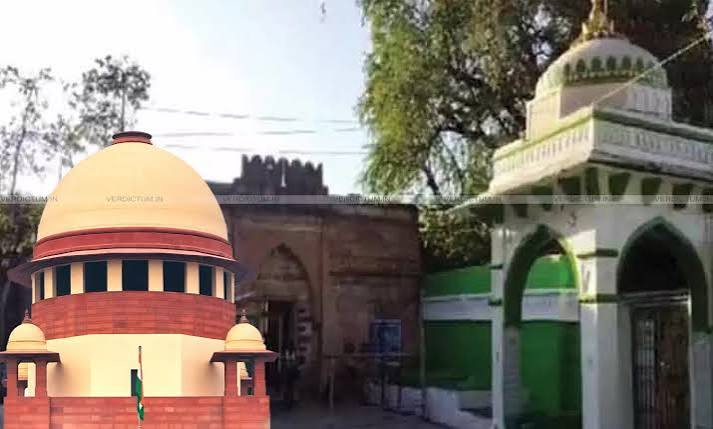
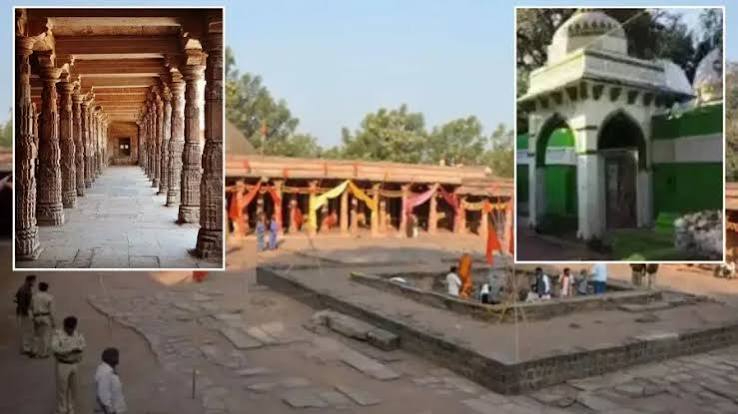
However, in order to maintain law and order, a bench headed by the Chief Justice of India (CJI) has implemented an interim arrangement. Accordingly, no Namaz will be allowed inside the Bhojshala complex. Instead, it has directed the Madhya Pradesh government to allow the Muslim community to offer prayers in an open space adjacent to the complex from 1 to 3 pm every Friday.
These are very sensitive matters, be patient: CJI’s advice
During the hearing, the Chief Justice strongly emphasized the need to maintain peace and harmony in the country. “This is a very sensitive matter. Here, any small order given in a hurry by the court can send the wrong message to the society and create a law and order problem. We have noticed the helplessness of the state in the wake of the High Court order. Therefore, both the religions should be patient,” the CJI said.
The bench, which accepted the appeal filed by the Muslim side, issued official notices to the Hindu parties, the Central Government, the Madhya Pradesh Government and the Archaeological Survey of India (ASI) and sought their response. It also issued a strict order that the ASI cannot make any structural changes to the disputed site without the written permission of the court.
Background to the dispute and the twist given by the High Court
The reason for this entire conflict was the historic verdict given by the Madhya Pradesh High Court on May 15. A bench of Justices Vijay Kumar Shukla and Alok Awasthi had ruled that the 11th century monument was originally the Vagdevi temple and an ancient Sanskrit learning center.
Earlier, according to the 2003 ASI rules, Hindus were allowed to offer prayers inside every Tuesday and Muslims were allowed to offer prayers inside every Friday. But the High Court had struck down this old system and banned indoor prayers completely. It also directed the government to provide alternative land in Dhar city for the Muslim community to build a mosque. This was challenged in the Supreme Court by the mosque’s in-charge, Qazi Moinuddin.
Final stand in the 3rd week of July
Historical significance: According to historians, this Bhojshala was built during the reign of Raja Bhoj, a philosopher and patron of the arts. Hindus argue that a part of it was converted into a Kamal Maula mosque during the later Mughal rule. Like Ayodhya and Gyanvapi, this is also one of the oldest religious disputes in the country.
The Supreme Court has given an interim order to maintain the status quo for the time being and will take up the next important hearing of the case in the third week of July. It remains to be seen whether the country’s highest court will provide a permanent solution to this delicate crisis by the end of July.