

Rome: The government led by Italian Prime Minister Giorgia Meloni is preparing to impose a complete ban on the wearing of traditional Muslim face-covering garments—specifically the ‘Burqa’ and ‘Niqab’—in Italian schools and educational institutions. Speaking at a convention of the youth wing of her party, ‘Brothers of Italy,’ in Rome, she announced three key draft proposals: banning these face-covering garments, capping the number of foreign students in classrooms, and making Italian language learning mandatory for foreign parents. This new policy will come into effect as law after receiving Cabinet approval and subsequent parliamentary consent within 60 days.
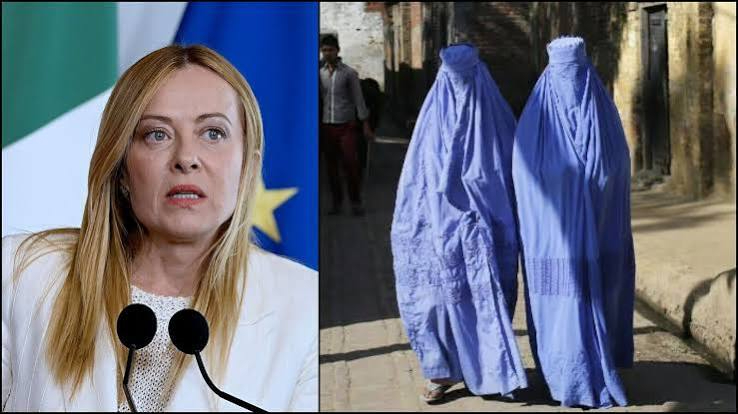
Ban on Burqa and Niqab: Legally prohibiting female students in schools and colleges from wearing the Burqa (which covers the face completely) and the Niqab (which leaves only the eyes visible); the Hijab (which covers the head) is not included in this proposal.
Limit on Foreign Students: Setting a maximum limit (cap) on the number of students of foreign origin in each classroom in Italian schools.
Mandatory Language Learning for Parents: Making it mandatory for parents of foreign students—who struggle to adapt to the school environment—to attend Italian language classes. ‘Those coming to Italy must respect the rules’: Prime Minister Meloni asserted, “Anyone wishing to come to Italy and build a future here must respect our language, culture, and laws. Practices such as attending school with one’s face covered, or women concealing their identities in the name of tradition, cannot be accepted in Italy.”
Announcement of tax exemption: To appeal to the middle class, she also announced an exemption from the burdensome tax previously levied on small and medium-sized cars and scooters.
Other nations that have banned the burqa: Banning the burqa and niqab in public places and schools is not new to Europe. Around 24 countries worldwide have already imposed bans on face-covering veils. While France was the first to introduce such a law in 2011, Belgium, Austria, Denmark, Switzerland, the Netherlands, and China have subsequently implemented similar restrictions.
2027 Election Strategy: General elections are scheduled to be held in Italy in 2027. Meloni’s right-wing government—which holds the distinction of being the longest-serving continuous administration in Italy since World War II—is aiming to consolidate its popularity by focusing on the issues of immigration and national identity. Social Integration and Controversy: While the ruling faction maintains that these rules facilitate the integration of foreign immigrants into the country’s mainstream, opposition parties and human rights organizations are likely to object, viewing them as a discriminatory policy targeting minorities and immigrants.