

France, Oct 19: In Belgium, rising household costs—compounded by cuts to public spending—have sparked protests among students unwilling to pay higher education or university registration fees. In France, massive protests have erupted, driven by two primary factors.
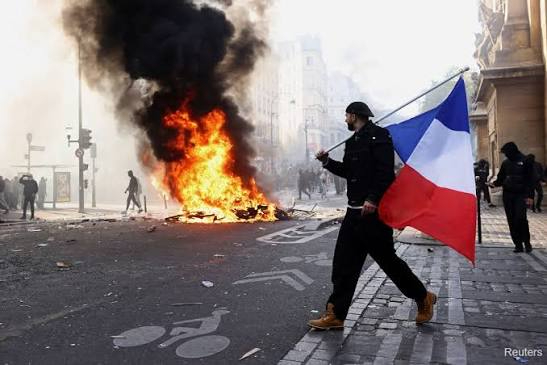
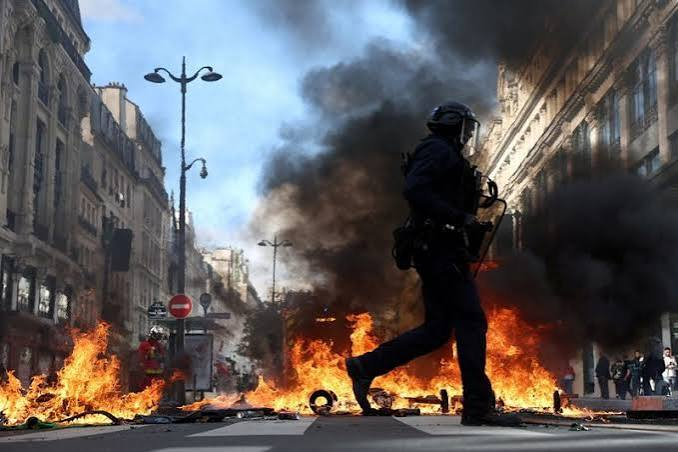
First, there is intense public outrage regarding soaring prices amidst the presidential election. Second, students and teachers are engaged in a large-scale movement protesting conditions in schools and cuts to educational funding. Under French law, President Emmanuel Macron is ineligible to run for another term; thus, his tenure will conclude with this election.
The student crisis in France began last month in Paris. Initially, teachers and students held small-scale, local protests demanding funding for education; however, the movement subsequently spread to a wider area. Since the protests began, violent clashes have been reported, and classes have been disrupted in many locations.
Today, the movement has evolved into a massive protest against rising fuel prices and the escalating cost of living. According to French Interior Minister Laurent Nuñez, speaking to the news channel ‘France 24’, 550,000 people participated in these protests against the decline in purchasing power; of these, 110,000 people took to the streets in Paris alone.
Yesterday, clashes erupted between protesters and police in Brussels and Liège, forcing the police to deploy water cannons. Belgium’s Interior Minister, Bernard Quintin, described the violence—which he noted was organized and repeatedly carried out with the intent to destabilize society—by labeling the protesters as “rioters.”
In Portugal, thousands marched in Lisbon to protest the rising cost of living, low wages, and the difficulty of finding affordable housing. In Lisbon and several other cities, property prices have doubled since 2017, and rents for new leases have seen a similar increase.
Italy is facing challenges similar to those seen elsewhere in Europe, with many protesting against the rising cost of living amidst a decline in purchasing power. Although the protests in Italy have been smaller in scale than those in France, clashes have been reported in Milan, driven by frustrations over stagnant wages, inflation, and the struggle to cover daily expenses.