

Spain: A horrific train tragedy in Spain has left the entire nation in shock. 69 people lost their lives when a high-speed train collided with a train that was stationary on the tracks. Just six days after this devastating incident, Transport Minister Óscar Puente has resigned from his post. The occurrence of two major train accidents within a single year has intensified pressure on the government.

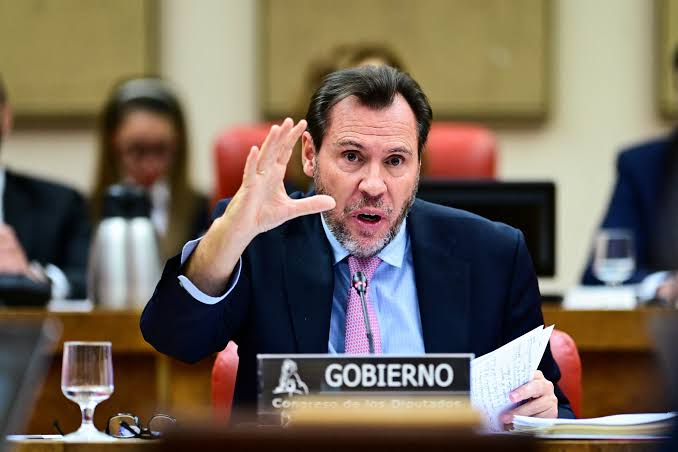
Transport Minister Óscar Puente has resigned in the wake of the catastrophic train accident in Spain that claimed 69 lives. He announced his decision six days after the accident occurred. He stated that he has taken this step, accepting moral responsibility, given that two major train tragedies have taken place in less than a year.
Puente announced his resignation after providing a detailed account of the accident to lawmakers over the course of several hours. He expressed the view that it would be inappropriate to continue in his ministerial position following the deaths of 69 people. He noted that his decision was made with consideration for the suffering of the victims’ families and the issue of political accountability.
How did the train accident occur?
A horrific train accident took place in Spain on October 28. A speeding train collided with another train that was stationary on the tracks. This tragedy claimed the lives of 69 people. It stands as one of the most horrific accidents to occur within Spain’s high-speed rail network in recent years.
According to reports, a technical fault arose in the communication system—a critical component for safety—on the Madrid-Seville rail line. This disruption compromised the monitoring of train movements.
Subsequently, the central control unit in Madrid granted clearance for a train to proceed; however, another train was already stationary on the tracks ahead. As a result, the two trains collided, leading to a catastrophic disaster. An investigation into the precise causes of this incident is currently underway.
This marks the second major rail accident in Spain within the same year. In a separate incident that occurred in January, 46 people lost their lives when a train on the Madrid-Seville line derailed and collided with an oncoming train.
These two incidents have raised serious questions regarding Spain’s railway safety system. A debate has emerged concerning potential lapses in the maintenance of tracks, the signaling system, and the oversight of train operations. New Measures for Railway Safety: In the wake of recent train accidents, the Spanish government has initiated new measures to strengthen railway safety. These include: improving working conditions in railway control centers; enhancing the monitoring of train movements; strengthening signaling systems; accelerating the implementation of the European Rail Traffic Management System (ERTMS); and improving communication between trains and control centers.
ERTMS is a European technological system designed to monitor train speed, traffic, and safety. Its implementation is expected to enable safer management of train operations.
Spain is renowned for its high-speed rail system and possesses the second-largest high-speed rail network in the world, trailing only China. This network connects major cities across the country via high-speed rail services.
The occurrence of two horrific accidents this year within this rail network—which has been in operation for over three decades—has sparked significant concern. Consequently, there is mounting pressure on the government to overhaul the railway safety system. With 69 fatalities, two major train tragedies, and the resignation of the Transport Minister, the safety of Spain’s railway system has now become a subject of global discussion.