

Bengaluru, Nov 06: Kempegowda International Airport (KIA)—renowned as the country’s third-largest airport and recognized for its cleanliness—is set to achieve a new milestone in aviation services. The Directorate General of Civil Aviation (DGCA) has granted approval for ‘mixed-mode’ runway operations at the airport. With this, KIA will become the second airport in the country, after Delhi, to implement such a system.
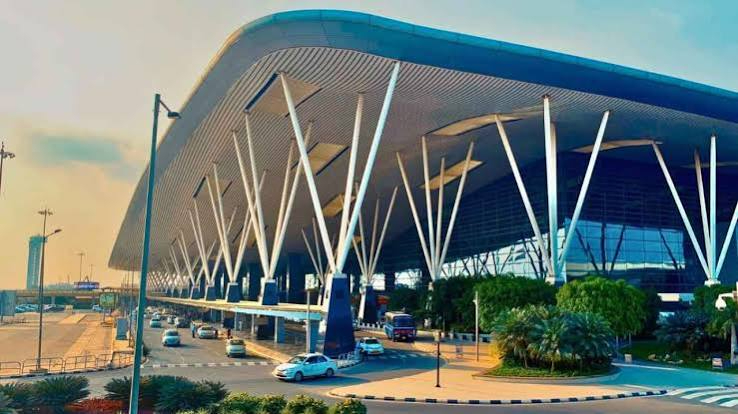
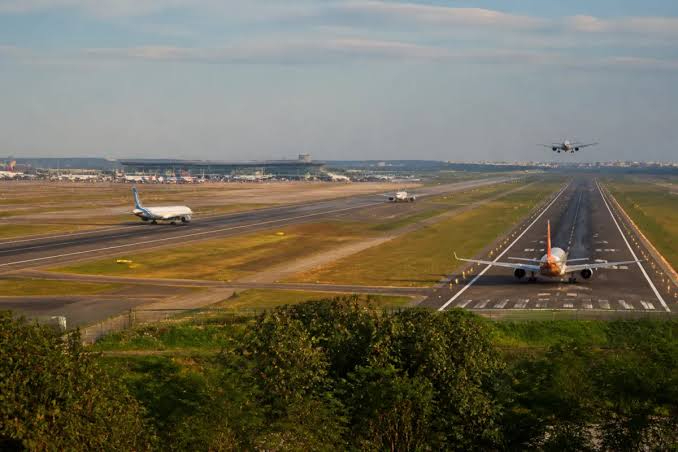
The adoption of this new system is expected to increase the airport’s approved handling capacity from 60 to 80 aircraft movements per hour. Beyond saving fuel and time, it is anticipated that the overall aircraft handling capacity will see an increase of 42%.
The proposal submitted by Bangalore International Airport Limited (BIAL) for mixed-mode runway operations has been approved, and services under this operational model are expected to commence soon. Sources have indicated that the DGCA has directed the safe use of runways for both arrivals and departures under ‘mixed-mode’ operations, subject to safety protocols, traffic conditions, and air traffic control clearances.
What is a ‘mixed-mode’ runway?
This is a system that efficiently manages both the take-off and landing of aircraft on the same runway. This model is primarily used at airports that face high demand but have limited space. Currently, this system is in operation at the Indira Gandhi International Airport in Delhi.
In a mixed-mode runway operation, an aircraft is permitted to take off immediately after another has landed. This helps address a shortage of runways while also saving time for passengers and conserving aircraft fuel. Until now, the two parallel runways at Kempegowda International Airport were operated separately—one dedicated to arrivals and the other to departures.
Expected 42% increase in capacity
The currently approved capacity at Kempegowda International Airport is 60 aircraft movements per hour—comprising 30 arrivals and 30 departures within that timeframe. Following the implementation of the ‘mixed-mode’ runway system, this figure is expected to rise to 85. Furthermore, taking into account traffic demand, operational schedules, and weather conditions, it is anticipated that more than 1,500 flights will operate daily.
The adoption of this new system is expected to save time and fuel, while also contributing to Bengaluru’s growth as a domestic and international aviation hub. Since take-offs and landings can be executed more efficiently on a single runway, passenger waiting times will also be reduced.
Additional Infrastructure
To support mixed-mode operations, improvements to infrastructure—such as additional taxiways and parking facilities—are expected. Bangalore International Airport Limited (BIAL) has already initiated plans for several infrastructure developments, including the expansion of Terminal 2, the addition of aircraft parking bays, and the construction of a new Air Traffic Control (ATC) tower.