

New Delhi, Nov 9: Air pollution in the national capital, Delhi, has reached dangerous levels, leaving residents struggling to breathe.
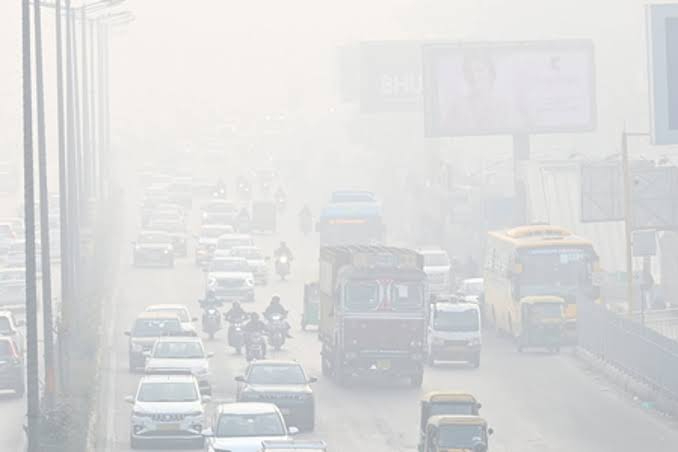
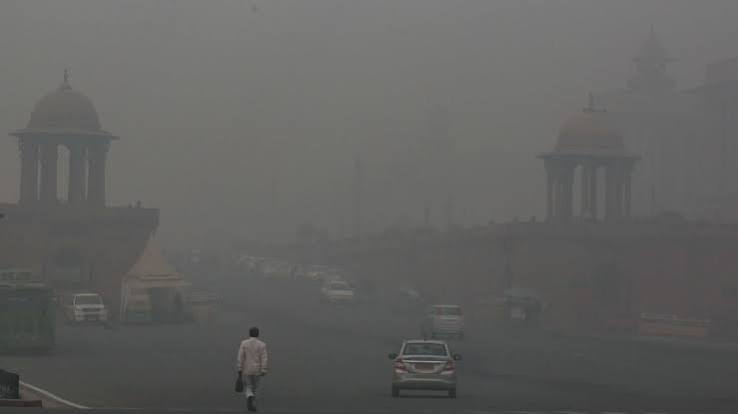
Early this morning, Delhi’s average Air Quality Index (AQI) was recorded at a hazardous level of 637. Even more alarmingly, around 1:31 AM, pollution levels spiked to a staggering 1,331—marking one of the worst air quality crises in the city’s history.
For comparison, on October 21, 2025—the day after Diwali last year—the AQI was recorded at 393. The fact that levels are 69% higher this morning highlights the severe deterioration of Delhi’s air quality following the festival.
Despite restrictions on the bursting of firecrackers, people in several parts of the national capital continued to set them off on Sunday evening. This has added further smoke and fine particulate matter to an already polluted atmosphere.
Similar levels of severe pollution have been recorded across various air quality monitoring stations throughout Delhi. A thick, grey haze has blanketed the city, obscuring roads and high-rise buildings behind a veil of smog. This has also significantly reduced visibility for motorists.
In October, the Supreme Court imposed restrictions on the use of conventional firecrackers. It permitted the bursting of ‘green’ (eco-friendly) firecrackers—subject to specific conditions—for a three-hour window on Saturday and Sunday.
Although green firecrackers emit less pollution compared to conventional ones, they are not entirely pollution-free. They still release various pollutants, including fine particulate matter, into the atmosphere.
In the Delhi-National Capital Region (NCR), home to over 30 million people, the intensification of air pollution during the winter months is an annual problem. Key contributors include firecrackers used during Diwali, vehicular emissions, industrial activities, dust from construction work, and the burning of agricultural waste in neighboring states.
The situation is further exacerbated during late October and November by a drop in temperature, lower wind speeds, and stagnant atmospheric conditions. As a result, pollutants do not escape the atmosphere, and a thick layer of smog persists over Delhi and its surrounding areas for several days.