

New Delhi, May 16: The Indian Prime Minister is on a visit to the Netherlands (PM Modi in Netherlands). After 14 years of diplomatic efforts, Prime Minister Narendra Modi will now bring back the Anaimangalam Chola copper plates of India, which date back to the 11th century, from the Netherlands to our country.
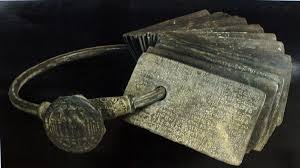
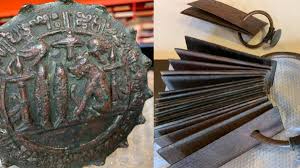
The Netherlands has agreed to return those copper plates to India. The Anaimangalam copper plates, also known as the Leiden plates, are one of the most important documents of the Chola dynasty.
The 21 copper plates date back to the reign of Rajaraja Chola I, who ruled South India in the 11th century. Florentius Camper, who was in India as a Christian missionary when the city of Nagapattinam in present-day Tamil Nadu was under the control of the Dutch East India Company, had taken these plates to the Netherlands. India had made a lot of efforts to get these plates back.
These tablets were donated to Leiden University. These tablets were in the Asian section of the university’s library for more than three centuries. India started the process of returning these tablets in 2012. The Netherlands urged India to start the process of returning these Indian heritage tablets through bilateral talks in 2023. This UNESCO-backed process finally led to an agreement between India and the Netherlands. Therefore, now that Prime Minister Modi is visiting the Netherlands, it has been decided to return these tablets.
What is the significance of this copper inscription?:
These tablets have been studied by several scholars of Indian history and Tamil epigraphy. It is also mentioned in Kalki Krishnamurthy’s historical novel ‘Ponniyin Selvan’. These tablets start with hymns to the Hindu god Vishnu and continue through a complete list of the god’s ancestors, covering the lineage of the Chola dynasty of Thanjavur.
The tablet is encased in a bronze bracelet. It also bears the seal of Rajendra Chola I. In those days, copper plates were engraved just as history was engraved on palm leaves. This is a great historical record for India.
The copper inscriptions were taken to the Netherlands during the Dutch colonial rule on the Coromandel Coast in the 18th century. Historians say that they were acquired by a Dutch officer, Florentius Camper, through a Christian missionary working in India when Nagapattinam was under the control of the Dutch East India Company.
In 1690, the Dutch East India Company shifted its Coromandel headquarters from Pulicat to Nagapattinam. During this period, these artifacts and inscriptions reached European hands. After this, the inscriptions entered the collection of Leiden University in 1862 through the estate of Professor Hendrik Arent Hamakar.
These were kept in the Asian collections of the university library. They were studied by historians and Tamil epigraphers. These artifacts, which have inscriptions in both Sanskrit and Tamil, were originally commissioned by Rajaraja Chola – between 985 and 1012 AD – to commemorate the acquisition of the Buddhist monastery at Nagapattinam in Tamil Nadu.