

Bengaluru: For the first time in the history of the country, the state government has taken a significant step to implement an Aadhaar-style biometric identification system for cattle, which are the lifeline of farmers.
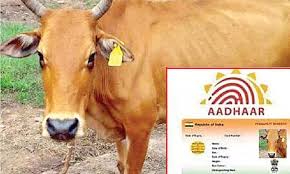
The state government is taking a major digital revolution in the animal husbandry sector in Karnataka, and soon an ‘Aadhaar’-style digital identification system for cattle will be implemented.
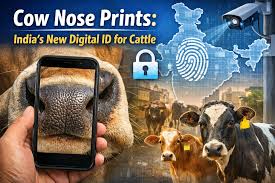
In this new system, a biometric identification card will be created based on the unique marks on the muzzle of the cattle.
This scheme, which is being implemented for the first time in India, will be an alternative to the traditional ear-piercing tag system.
Since the lines, folds and marks on the nose of cattle are unique like human fingerprints, it is being used as a digital identity.
The project has been developed in collaboration with the state’s e-Governance Centre (CeG) and the Artificial Intelligence Department, and preparations are underway to implement it on a practical basis.
Through this digital system, vaccination details, health status, insurance information and death compensation applications of cattle can be easily tracked.
Speaking at the event, Pankaj Kumar Pandey, Principal Secretary, Department of Personnel and Administrative Reforms (e-Governance), said that this project will help in ensuring accurate identification of cattle and also prevent fraud in animal husbandry projects.
Currently, there are more than one crore cattle in the state, and the number of cattle is increasing by about 10 lakh every year. He opined that an AI-based digital system will be effective in managing such a large number of cattle.
Srivyas HM, Project Director, Artificial Intelligence Division, Department of Personnel and Administrative Reforms, said, “Currently, ear piercing is being used for cattle identification. However, AI-based nose identification system will make identification easier and faster.
Another special feature of this project is that farmers will be given advance information about vaccination dates through SMS. Digital records can also be created for newly born calves. In the future, health assessment of cattle can be done through photo scans of the nose, he said.
This AI-based system is expected to strengthen digital governance in the Animal Husbandry Department and bring greater transparency and efficiency in cattle identification and record management.