

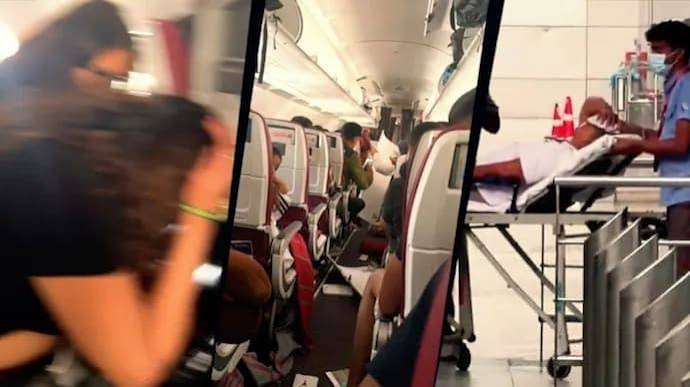
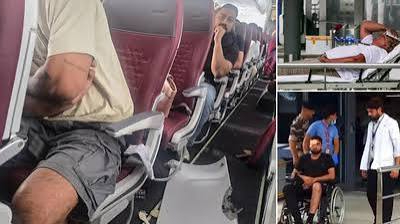
New Delhi, Sep 05: An Air India flight from Phuket to New Delhi was flying at an altitude of 36,000 feet when all three hydraulic systems failed within a few seconds, creating a major emergency. 24 passengers inside the cabin were injured due to the sudden change in altitude, and the plane, which lost contact with the autopilot, finally landed safely in Delhi.
Although the initial report released by the Air Accidents Investigation Bureau (AAIB) did not reveal the exact cause of the technical failure, the chief pilot was immediately dismissed from service after it was confirmed that he had consumed prohibited drugs.
All three hydraulics did not work at all: While flying at an altitude of 36,000 feet in Kolkata airspace, first the Green, then the Blue and Yellow hydraulic systems failed.
Autopilot cut: The autopilot immediately disconnected and the warning siren sounded. The out-of-control plane climbed to about 372 feet in just a few seconds, then suddenly fell to 292 feet.
Recovery in seconds: Fortunately, the blue system started working properly within a few seconds, followed by the yellow and green systems.
Ceiling panels broke, luggage boxes opened, the emergency exit door handle and the toilet commode were also damaged.
Drug use confirmed: A test conducted on the crew after the plane landed in Delhi found the presence of banned psychoactive substances in the body of the chief pilot. The co-pilot tested negative.
Air India takes strict action: The pilot has been removed from service with immediate effect under aviation safety rules.
Black box seized: The cockpit voice recorder (CVR) and flight data recorder (FDR) are being seized and analyzed to determine the exact cause of the incident and whether the pilot’s condition affected the flight controls.
What is an aircraft’s hydraulic system? An aircraft’s hydraulic system works in a similar way to the power steering and hydraulic brakes in a car, but it is much larger. When an aircraft flies at speeds of hundreds of kilometers per hour, the enormous pressure of the air falls on the wings and control parts. Against such strong air pressure, a human being cannot turn or control the huge wings or landing gears on his own.
For this, when hydraulic fluid is pumped through pipes at high pressure, these heavy mechanical parts are easily shaken.
Green system: It is mainly powered by the left engine. Blue System: Powered by an electric pump Yellow System: Powered mainly by the right engine
Since these three systems work independently, even if one or two of them fail, the plane can still take off and land safely. However, a complete failure of all three hydraulic systems at an altitude of 36,000 feet is an extremely rare and serious emergency.
The parts that turn the plane up, down, and side to side become completely stiff or do not move at all.
During landing, the flaps that extend from the wings to slow the plane down do not open. This inevitably forces the plane to land at a dangerously high speed on the runway.
The wheels cannot be extended using hydraulic power. Pilots have to pull a manual lever to allow the wheels to fall down and lock. All these problems arise after the wheels touch down on the runway, with the front wheel steering and normal anti-skid brakes not working.