

Beijing, Aug 24: China has embarked on an ambitious project called the ‘Golden Border-Coast Loop’, which will connect its entire land borders and coastlines and will be over 25,000 km long. It is about 18 times longer than India’s longest Delhi-Mumbai Expressway (1,386 km), and China aims to complete it by 2030.
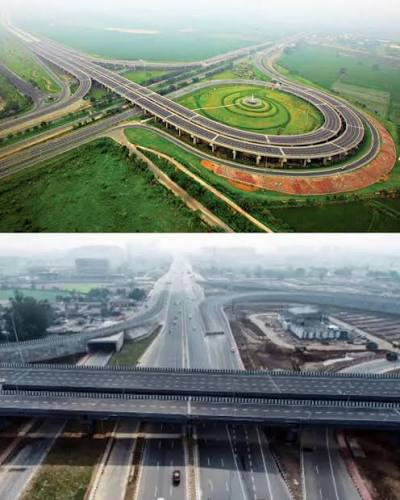
Starting from Guangxi, it runs through Tibet and Xinjiang. It is very close to the borders of many countries including India, Bhutan, Nepal, Pakistan, Vietnam. It then connects the border areas of Mongolia, Russia and North Korea in northern China from Xinjiang. It connects the entire east-southern seaboard of China from Liaoning to Guangxi via Shanghai.
Impact on India and Security Challenges Convenience for military deployment: The G219 highway is very close to the borders of Ladakh (Aksai Chin) and Arunachal Pradesh, which will help the People’s Liberation Army (PLA) to quickly transport weapons and troops in case of war.
Opposition from India: India has been strongly opposed to China’s road expansion and infrastructure development in the disputed border areas.
Vibrant Villages Program (VVP): In response to this border road network by China, India has accelerated the construction of frontline roads, tunnels and helipads along the Line of Actual Control (LAC) through the Border Roads Organization (BRO).
Environmental and geographical sensitivity: The construction of this major highway in the rugged, earthquake-prone ecologically sensitive zones of Tibet and the Himalayas has also increased the risk of natural disasters in the future.