

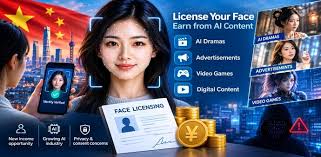
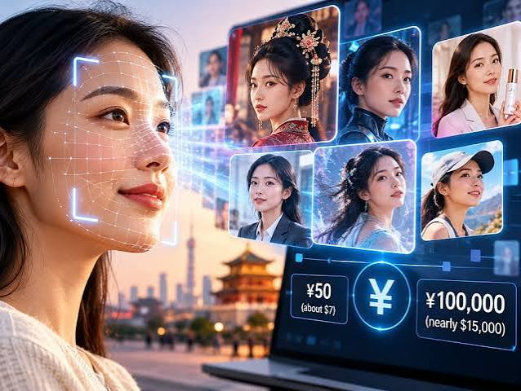
China: Artificial Intelligence (AI) technology has sparked a revolution in the market. According to a report by Moneycontrol, people in China are earning significant income by licensing the use of their photos and faces for AI-generated content. Payments for this range from Rs.1,500 to Rs. 65,000. This unique trend is currently making waves in China, with people voluntarily granting permission for their faces to be used in AI shows, advertisements, and video games.
The Trend of Renting Out Faces:
The trend of renting out one’s face is growing rapidly in China. According to a report by ‘Rest of World,’ AI was utilized at some stage in the production of over 95% of the 128,000 micro-dramas released in the first quarter of 2026.
Micro-dramas are ultra-short web series (lasting 1 to 2 minutes) produced specifically for mobile viewing. Each episode concludes with an intriguing twist, compelling viewers to tune in for the next one. A typical series consists of anywhere from 50 to over 100 episodes. So, how do people rent out their faces for AI content? Find out here how this works and whether the practice is safe.
Why is there such a high demand for human faces?
A Chinese platform called ‘ActID’ connects individuals willing to license their photos with producers seeking faces for AI content. According to the company’s marketing head, Camilla Yan, producers require not only attractive faces for lead roles but also specific types of faces, such as those of elderly people. AI dramas do not require acting skills; the faces serve merely as “source material.” The growing demand for AI content has increased the need for new faces, prompting people to come forward to earn money.
How does one rent out their face?
The ‘ActID’ platform, launched in March, manages this entire process. Individuals can visit a studio to have their photos taken. Producers then select faces suitable for their projects based on criteria such as age, gender, and appearance. The decision on whether or not to license a face is based entirely on the photographs provided.
Once the photos are finalized, the licensed faces can be used across various media, including short films, advertisements, and video games. The individual or model retains the right to decide the type of content in which their face may be used.
A major risk lies in the lack of clarity regarding licensing terms. It is difficult to track who uses the photo, how often, where, and for what purpose. Consequently, there is a risk that the photo could be misused, potentially harming the individual’s reputation or moral standing. Thus, this new AI trend carries the risk of significant downsides alongside potential benefits.