

Hyderabad, Nov 07: Sunlight Available Even at Night: An American Company Plans to Sell Light from Space
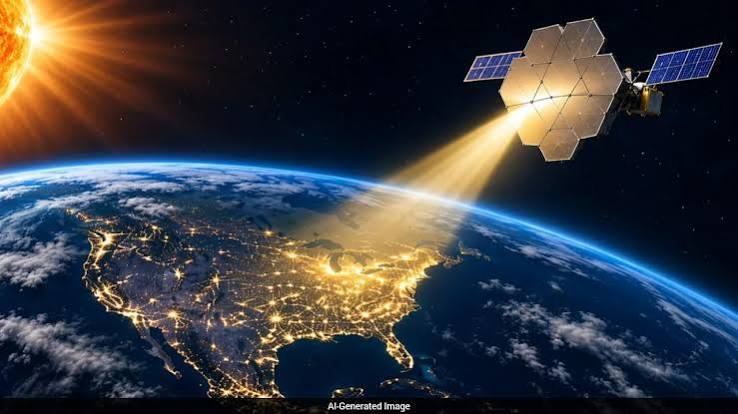

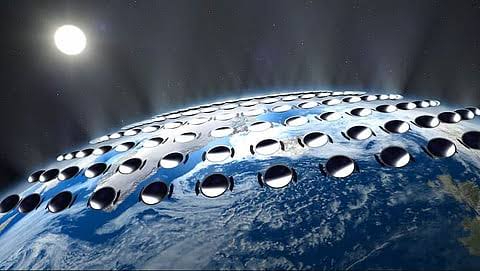
The American company ‘Reflect Orbital’ has devised a plan to install massive mirrors in space to provide sunlight to Earth during the night. To facilitate this, it has entered into an agreement with India’s Skyroot Aerospace for two rocket launches. However, scientists have warned that this light could impact the night sky within a radius of up to 30 kilometers.
We typically use streetlights, fluorescent tubes, or LED lights to dispel darkness at night. Now, however, an effort is underway to bring sunlight to Earth directly from space. Indeed, an American startup has formulated a plan to sell sunlight even during the nighttime. Hyderabad-based Skyroot Aerospace has joined forces for this ambitious project.
A Plan to Install Massive Mirrors in Space!
A California-based company called ‘Reflect Orbital’ has initiated this novel experiment. The plan involves deploying satellites equipped with giant reflective mirrors into orbit, hundreds of kilometers above the Earth. These mirrors will reflect sunlight, directing it onto specific areas on Earth during the night.
According to the company’s plan, the system could provide illumination over an area spanning approximately five kilometers. There are also plans to incorporate a mechanism to adjust the intensity of the light or switch it off completely, depending on requirements.
For this project, Reflect Orbital has entered into an agreement with India’s Skyroot Aerospace for two rocket launches. The first satellite is planned to be launched via Skyroot’s Vikram-1 rocket, while the second launch is intended to utilize the Vikram-1U rocket, which is currently under development.
This technology could help solar power plants remain operational for longer periods after sunset. Furthermore, the company envisions providing illumination to support rescue operations, emergency search efforts, and industrial activities during natural disasters.
Concerns Raised by Scientists:
However, the project has faced opposition from astronomers and environmental experts. Light reflected by space-based mirrors would not be confined solely to the target area; dust particles and molecules in the atmosphere could scatter the light to other regions.
According to model calculations from scientific studies, the effects of this light could extend as far as 30 kilometers away from the intended target area. There is concern that this could impact stargazing, astronomical research, the natural life cycles of animals, and human sleep.
Therefore, it remains to be seen whether this experiment—which provides sunlight even during the night—will truly be a success, or if it will instead pose a new challenge for the environment.