

Bengaluru, June 01: The Himalayas, a region of ever-snow-capped, majestic and towering mountain ranges, are facing an environmental crisis.
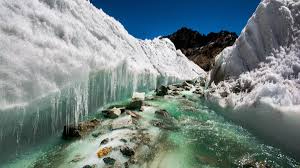
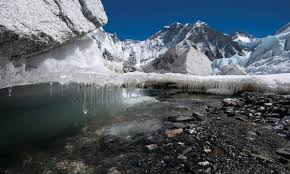
Glaciologists and experts working in the region have expressed serious concerns about the falling water levels in rivers and streams, including the Indus River.
Experts said that this is not only affecting the water needs of local communities and downstream people but also across international borders. The water levels have been declining for the last decade, but this year it has been noticeably more pronounced.
Professor Anil Kulkarni, a renowned glaciologist and special scientist at the Centre for Climate Change, Divecha Centre, Indian Institute of Science, Bangalore, said that there are various dimensions to the declining water levels and snow cover in the Himalayas.
He said that increasing human activity is the main reason for the decline in snow mass accumulation. This year, there has been a decrease in snow mass. Temperatures are rising faster than expected at higher elevations and, in some cases, higher than in the plains.
To address this, the concept of ice stupas (a technique of grafting to create artificial glaciers to store water for winters and harsh times) is being popularised,” he said.
The problems in the Himalayas are different and more complex than in other regions. They are local, across borders and internationally. Gradually, the Indus River will be affected. .
Prof. Kalachand Sain, director of the Wadia Institute of Himalayan Geology, Dehradun, said that this year and especially this season, there has been less snow and the protection provided by the snow cover to the glaciers has also reduced.
This has affected the health of the glaciers, affecting the water levels in the local areas and in the Indus, Ganga and Brahmaputra rivers. The rate at which the glaciers are melting has changed.
Environmental and local factors are also playing a crucial role in these changes, he said. Another concern is that the rainfall pattern is changing in the high altitude areas ranging from 2,800 metres to 3,000-3,500 metres. Experts said.
He called for an urgent need to carry out studies on the total water levels in flowing water bodies and glaciers, melting of glaciers, rainwater harvesting and groundwater levels. He said there is a need to ensure sustainability and prepare models accordingly.