

New Delhi, Aug 3: The Central government today told the Supreme Court that the government is fully committed to its assurance that no criminal or legal action will be taken against the students who protested against the NEET Paper Leak. However, it also clarified that no immunity will be given to those involved in serious and heinous crimes. A bench headed by the Chief Justice of India (CJI) today heard a petition related to the violence and lathicharge during the ‘Sansad Chalo’ march on July 20.
Protection of students:
Keeping in mind the future of the students, the government has decided not to take any stringent action against them. Solicitor General Tushar Mehta, appearing for the Central government, told the Supreme Court that an appropriate way will be found in consultation with the state governments to withdraw or close the cases against them.
“We have spoken to the petitioner. We do not want any legal action against the students. All necessary steps will be taken for this. However, criminal and anti-social elements who have infiltrated under the pretext of student protests cannot be given immunity under any circumstances. Discussions have also been held with senior advocate Vrinda Grover regarding withdrawal of FIRs against the students,” Solicitor General Tushar Mehta told the court.
No immunity for anti-social elements:
This assurance of the government is applicable only to student protesters. However, the government has clarified that anti-social elements with serious criminal backgrounds who have infiltrated and committed violence under the pretext of protests will not be given immunity or immunity under any circumstances.
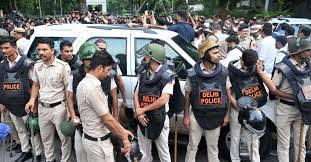
Hearing this matter, the Supreme Court has directed that the cases against genuine student protesters and the cases against criminals be investigated separately immediately. The court also expressed concern over the excessive use of force and lathi-charge by the police on the protesters. The court is considering setting up a committee or investigation team (SIT) headed by retired judges to investigate this.
Senior advocate Abhishek Manu Singhvi argued that the scope of the term ‘criminal background’ should be clarified, otherwise there is a risk of even minor political protests or trivial cases being considered as criminal background.
Clarifying this, the Supreme Court clarified that ‘criminal background’ means only those facing murder or other serious crimes. Minor political protests or trivial cases are not included in this.
The court also expressed concern over the allegations that the police used excessive force during the protests. Advocate Gopal Shankaranarayanan, appearing for the petitioner, questioned the identity of the officers who ordered and carried out the lathicharge.
The Supreme Court said that excessive behavior by police officers can never be justified or defended. The court said it is examining whether a Special Investigation Team (SIT) should be formed to investigate the police’s conduct or a committee headed by retired judges.
Next hearing on August 18:
At the end of the hearing in the case today, the Chief Justice fixed the next hearing for August 18. The Supreme Court said that the constitution of the proposed committee headed by retired judges and its terms of reference will be decided on that day, and ordered all parties concerned to file their replies or affidavits by the next hearing.