

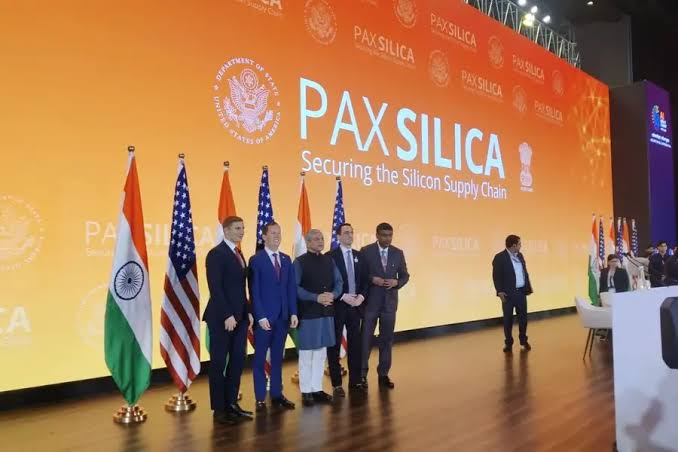
New Delhi, Nov 16: A new US-led group has been formed in response to China’s rapid advancements in the field of Artificial Intelligence (AI). This global alliance, spearheaded by the United States, aims to strengthen the security of supply chains for AI and critical technologies. India has also signed the agreement.

Since the global supply chains for AI and critical minerals are currently under Chinese control, the United States has been seeking an alternative framework for several years.
Reports suggest that the US is concerned following allegations that Nvidia CEO Jensen Huang maintained an illicit relationship with a suspected Chinese spy. It is understood that this has prompted the formation of the US-led group, aimed at decoupling AI and critical mineral supply chains from Chinese control.
The agreement—referred to as the “San Francisco Declaration on the Secure Foundation of Enduring Prosperity”—has been signed by the United States and India, alongside Japan, Australia, Israel, the United Kingdom, South Korea, Qatar, and the United Arab Emirates (UAE). Germany, Sweden, the Netherlands, and the European Commission are also expected to sign next week.
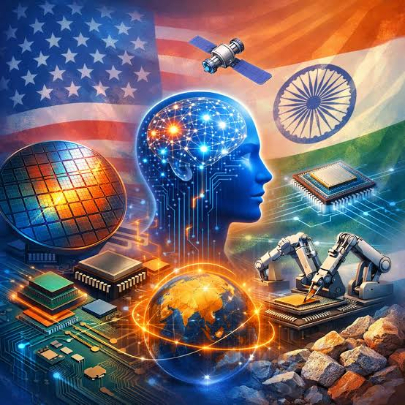
The United States has launched an initiative called ‘Pax Silica,’ aimed at building a secure supply chain for the global AI industry—encompassing semiconductors, critical minerals, advanced manufacturing, energy infrastructure, and data centers. The ‘San Francisco Declaration’ is a component of this initiative.
What does India stand to gain by joining this US-led group?
India is striving to take a lead in the fields of semiconductors and AI. The country has set out to significantly ramp up semiconductor chip manufacturing, increase investments in the technology sector, and build its own AI infrastructure.
For this to be achievable, the supply chain must remain uninterrupted. If essential raw materials or components become unavailable, the industry’s progress would be hindered. It is likely for this reason that India has signed the San Francisco Declaration.