

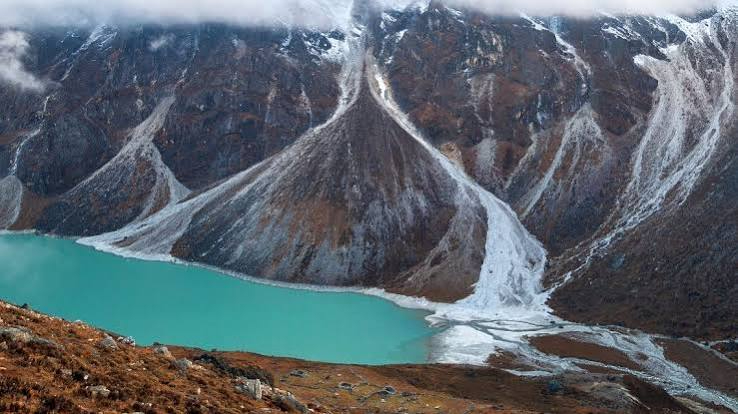
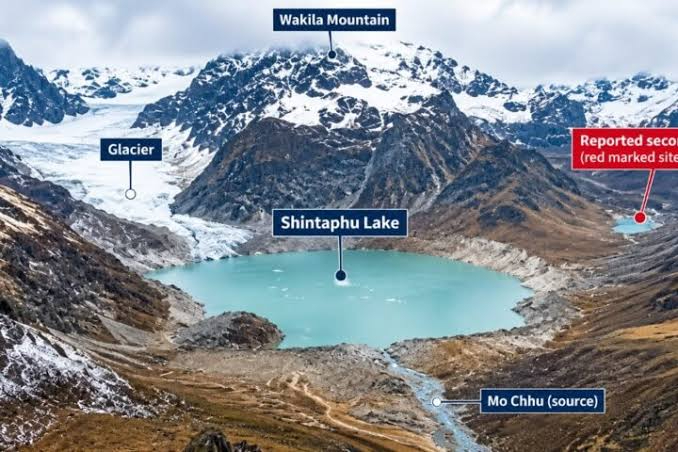
Gasa (Bhutan), Oct 30: A massive glacial outburst occurred on the night of October 29 at Shintafu Lake, located in the Laya region of the Gasa district in northwestern Bhutan. This has raised fears of flash floods in the Indian border states of West Bengal and Assam; consequently, a high alert has been declared for low-lying areas in both states.
Meanwhile, the Central Water Commission and the government are closely monitoring the situation, and the process of relocating residents living along the riverbanks to safer areas has begun. Here is a report on the incident:
What caused the glacial outburst?
The outburst at Shintafu Lake—situated in the Laya region of Gasa district—occurred on the night of October 29, driven by rising temperatures in the Himalayan region and instability within the natural ice barriers.
It is estimated that approximately 7.4 million cubic meters of water have been released from the lake. Following the breach of Shintafu Lake, this volume of water is flowing through the Mochu and Punatsangchu rivers, eventually entering the Sankosh River, which flows toward the Indian border. Consequently, there is a risk of a sudden rise in water levels in the Sankosh River.
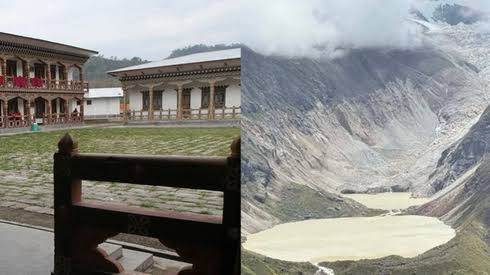
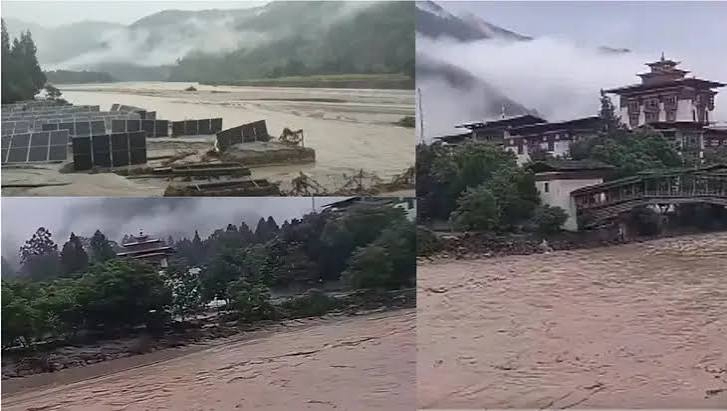
Meanwhile, infrastructure at the Gasa Tshachu natural hot springs—a popular tourist destination in the Gasa district—along with two Bailey bridges, has been washed away by the floods. Additionally, a solar-powered irrigation project in the Punakha region has sustained damage, and highways have been closed. As people were evacuated in advance, no casualties have been reported.
Furthermore, due to the sudden rise in water levels in the Sankosh and Brahmaputra rivers—which flow from Bhutan—high alert has been issued for the Alipurduar, Cooch Behar, and Jalpaiguri districts in West Bengal, as well as the Dhubri and Kokrajhar regions in Assam. Accordingly, residents of riverbank areas—including those living near tea estates in West Bengal’s Alipurduar and Cooch Behar districts—are being relocated to safe camps, along with their livestock. More than 10,000 people have already been moved to safety.