

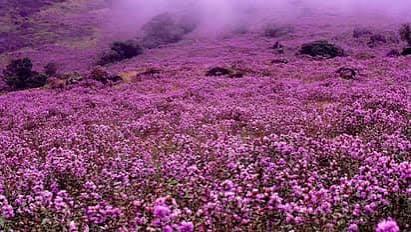
Kudremukh, September 29: Rare Neelakurinji flowers have bloomed across the mist-covered hills of Kudremukh in the Western Ghats, capturing the attention of nature enthusiasts. Typically blooming en masse once every 12 years, the appearance of these flowers four years ahead of schedule has sparked curiosity.
For the past month, Neelakurinji flowers have been blooming in the Shola grasslands of the Gangadikallu, Chittegudda, and Kudremukh mountain regions within the Kudremukh National Park. Given that a mass blooming event occurred here in 2018, the next major bloom was anticipated for 2030; however, their appearance in 2026 is a notable occurrence.
Is Climate Change the Cause?
The precise scientific reason for the early blooming of Neelakurinji has not yet been confirmed. Variations in temperature, rainfall, and soil moisture resulting from global climate change could potentially influence plant growth and flowering patterns. However, there is currently no scientific evidence to directly attribute this early blooming in Kudremukh to climate change. Variations in local environmental conditions and the plant’s growth stage could be contributing factors. Therefore, further study by botanists and environmental experts is required to understand the reason behind this unusual early flowering.
A Source of Sustenance for Pollinators:
The Neelakurinji plant accumulates energy over several years of growth, then blooms and produces seeds before completing its life cycle. During the flowering season, the blossoms serve as a vital source of food and pollen for various pollinators, including honeybees and butterflies. Found in certain Shola forest regions of Karnataka, Kerala, and Tamil Nadu, this rare plant plays a significant role in the delicate ecosystem of Kudremukh.
Forest Department Urges Against Plucking Flowers
Ruthren, the Deputy Conservator of Forests (DCF) for the Kudremukh Wildlife Division, has advised tourists to refrain from touching, plucking, or damaging any flowers or plants, including the Neelakurinji.
Tourists are encouraged to admire the beauty of the rare Neelakurinji flowers but must strictly avoid touching, plucking, or damaging them. Everyone should cooperate in conserving the plant’s habitat. The area is under constant surveillance, and no violations of the rules will be tolerated.