

Washington, Nov 6: A U.S. intelligence agency has released a remarkable photograph of a secretive Chinese spacecraft orbiting the Earth. Known as ‘Shenlong’—or “Divine Dragon”—this robotic spaceplane has been in operation for approximately six years.
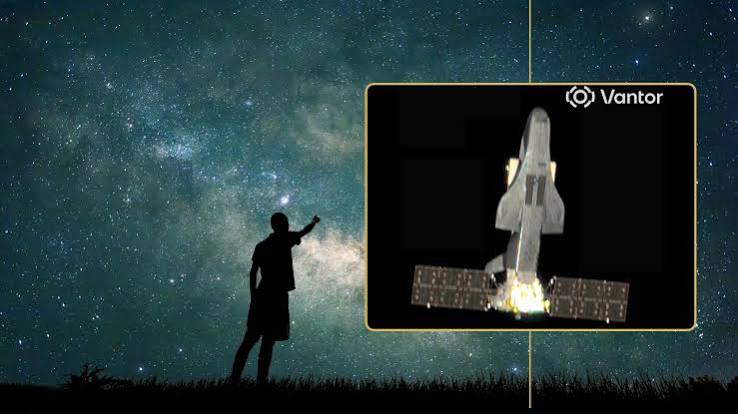
‘Shenlong’ has frequently made headlines for deploying unidentified objects into Low Earth Orbit (LEO). Its activities have been closely monitored using tools such as ground-based radar. This new photograph reveals striking details of the craft, which will assist researchers in studying its capabilities.
According to ‘space.com‘, the image was captured in 2024 by a satellite belonging to Maxar Technologies (now VantAI) from a distance of 90 kilometers. It features a resolution of 4.5 centimeters per pixel. The image is part of a threat assessment report by the Defense Intelligence Agency (DIA), which identifies ‘Shenlong’ as a spaceplane.
What is the purpose of ‘Shenlong’? It is evident that ‘Shenlong’ can be launched into orbit to deploy objects, conduct experiments, and subsequently return to Earth. A photograph shows Shenlong docked with another satellite, with its solar panels deployed.
‘Shenlong,’ a reusable spaceplane, bears a resemblance to the ‘X-37B’ built by the American company Boeing. It is launched via a rocket; once it enters orbit, it eventually returns to Earth and lands much like a conventional aircraft.
This Chinese spaceplane is currently on its fourth mission. The mission officially commenced on February 7 of last year, with Shenlong being launched from China’s Jiuquan Satellite Launch Center aboard a ‘Long March 2F’ rocket.
China has not released any official photographs of ‘Shenlong.’ In his notes, Vantor stated that the craft is 26 feet long. ‘Space.com’ has published a list of cities where Shenlong is expected to be visible this week, citing information provided by ‘Heavens-Above.’
It is reported that the craft will pass over Denver on November 3, and over Los Angeles on November 5 and 6. This will give people the opportunity to observe it with the naked eye. ‘Space.com’ further stated that the early morning sky will offer the best chance to view it.